WooCommerce Is Changing, and So Is My Job

For the last 14 years, my work has revolved around WooCommerce. To say I know the platform inside and out would be an understatement 🙂

I’ve built websites, courses, plugins, events, partnerships, and communities around it. Some things worked better than expected; others slowly faded away or just weren’t for me.

But something feels different today: WooCommerce is entering a new phase.

We’re seeing them build in public, experiment, and ship faster than before—all while documenting the process on the dev blog. There’s a stronger focus on the admin experience, adding more features to core, and truly investing in the people behind the ecosystem.

But as the platform evolves, so does the way we build our businesses. And when the platform changes, the opportunities change too.

Over the last few months, I’ve reviewed every revenue stream in my business with one simple question: what should I focus on for the next five years?

Well, the answers are completely different than they were a few years ago.

Continue reading WooCommerce Is Changing, and So Is My Job

Does Shopify Make WooCommerce Better?

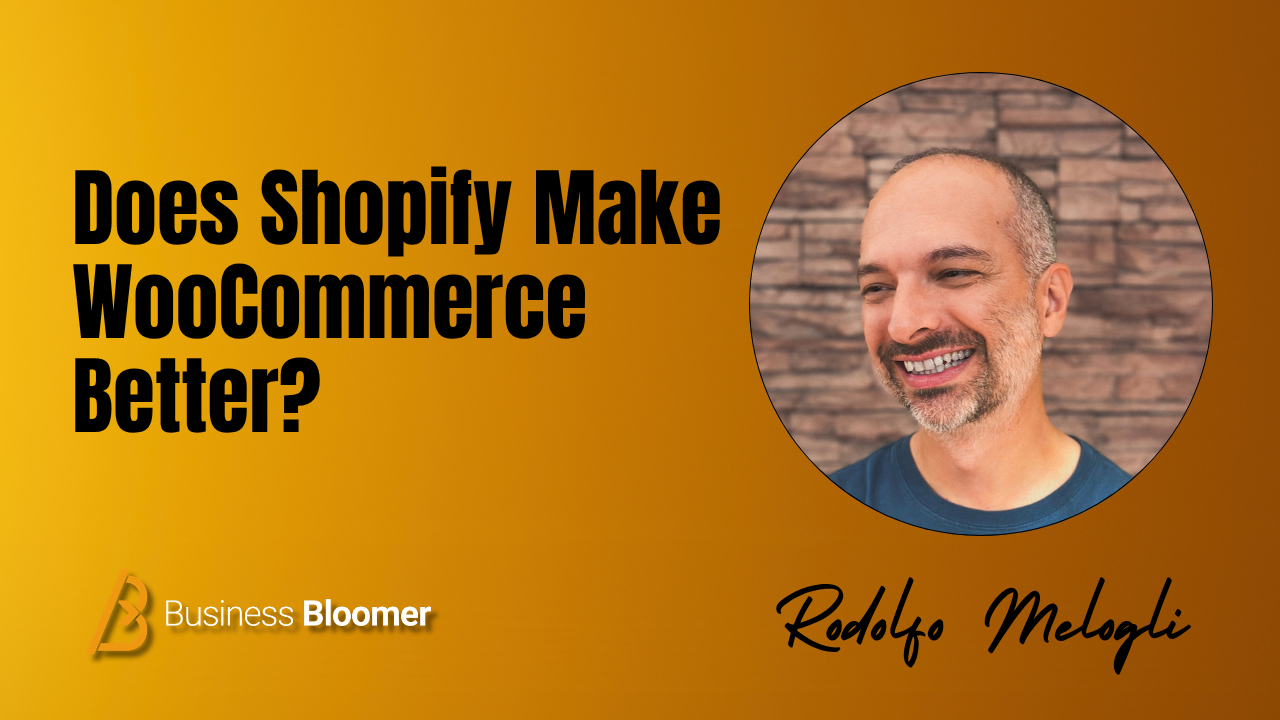
In less than two weeks I’ll be speaking at the upcoming WordCamp Europe 2026 on “Why WooCommerce loves its competitors, and I’d like to pressure-test an idea before I get on stage.

One of my slides may surprise a few people. It’s titled “Why Shopify Is Good for WooCommerce“.

For years, many people in our ecosystem have looked at Shopify as the enemy. The company with thousands of employees, massive marketing budgets, and enough money to put their brand in front of almost every merchant on the planet. The instinctive reaction is to compare ourselves and feel threatened… but I see it differently.

The more I think about it, the more convinced I become that Shopify’s growth has been one of the best things that could have happened to WooCommerce.

This is one of those topics where I know people can land on completely different conclusions. That’s why I’d love your feedback. If you think Shopify has helped WooCommerce, tell me why. If you think I’m wrong, tell me where my argument falls apart. Comments are open.

Continue reading Does Shopify Make WooCommerce Better?

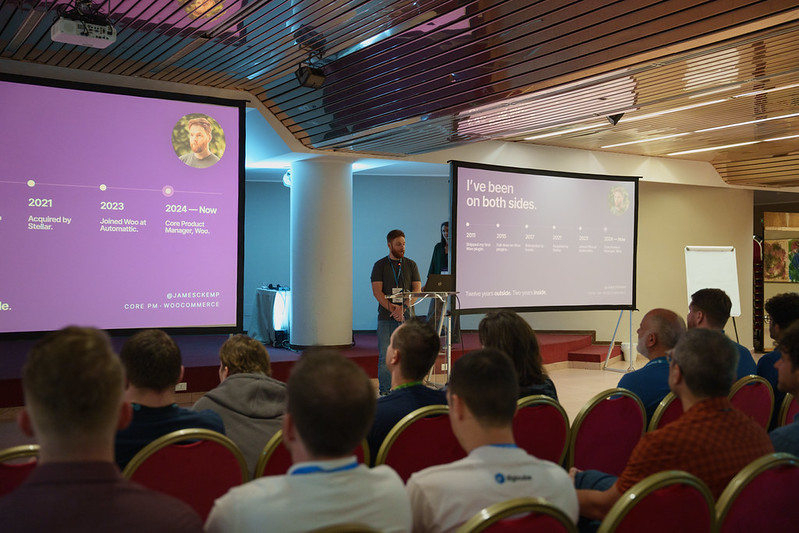
My Take: Why Liquid Web Made This Move

A lot of people in the WordPress space reacted strongly on May 12, 2026 when the StellarWP websites started redirecting to Liquid Web landing pages. Suddenly brands like Kadence, LearnDash, GiveWP, The Events Calendar, IconicWP and others looked like they had disappeared overnight.

I saw many tweets calling this “the end of an era”, and I understand the emotional reaction. These are products many of us have used for years. Some of these companies were founder-led businesses with strong identities, loyal communities, and recognizable brands at WordCamps and across the WooCommerce and WordPress ecosystem.

They also carried a lot of SEO value, years of backlinks, and strong brand recognition within the WordPress ecosystem. These were not random plugin websites. They were established businesses that many people trusted and followed for years.

Still, I think the reaction became bigger than the actual situation. My opinion is that this is not a shutdown story. It’s a consolidation story.

Continue reading My Take: Why Liquid Web Made This Move

Why Doesn’t WooCommerce Have a 1-Click Demo?

WooCommerce has a massive advantage over every ecommerce platform out there, and somehow we’re barely using it.

In the era of Playground, instant sandboxes, software onboarding, and interactive product tours, it feels almost unforgivable that WooCommerce still doesn’t offer a proper 1-click demo experience.

Just click a button and play with a fully functional store in seconds!

Unlike SaaS platforms, WooCommerce already sits on top of WordPress, Playground exists, and we can spin up disposable environments almost instantly. Imagine a guided WooCommerce demo packed with some test orders, a bunch of sample products, onboarding tooltips, and interactive walkthroughs that show people exactly why WooCommerce is powerful.

Instead, most of the time we send potential users to long landing pages, technical docs, fancy case studies, and scattered YouTube videos… I think we can do much better.

Continue reading Why Doesn’t WooCommerce Have a 1-Click Demo?

Let’s Stop Stressing About WooCommerce Market Share

Close-up of eyeglasses on a table with colorful business charts.

Everyone keeps asking the same thing… what’s WooCommerce market share right now?

And depending on where you look, you’ll get a different answer. One source says one thing, another says something else. It goes up, it goes down, sometimes it feels like it changes every week. And yes, it’s kind of interesting… I get it.

But here’s the thing: we’ve slowly turned that number into a scoreboard.

If it grows, we relax. If it drops, we panic. If it stays flat, we start wondering what’s wrong. Meanwhile, the actual work—building, improving, communicating, supporting the ecosystem—doesn’t really change.

In this article I want to share a simple idea: we probably need to stop stressing about WooCommerce market share. And that’s because it’s not the thing that will move WooCommerce forward.

There’s always work to do anyway… product, developer trust, communication, community, brand. Even if the number was 99.9%.

Continue reading Let’s Stop Stressing About WooCommerce Market Share

An Open Letter to WooCommerce and the Woo Community

Dear WooCommerce,

If there’s one thing Checkout Summit confirmed for me, it’s that what we’ve built around Woo is bigger than software.

For 14+ years, I’ve been inside this ecosystem. Working with small, medium, and large clients, building products, teaching developers, solving merchant problems, speaking with agencies, and watching thousands of businesses choose WooCommerce as the engine behind their livelihoods.

You spend enough time in an ecosystem like this and you start to understand its rhythm—its strengths, its weaknesses, and the things that keep it moving.

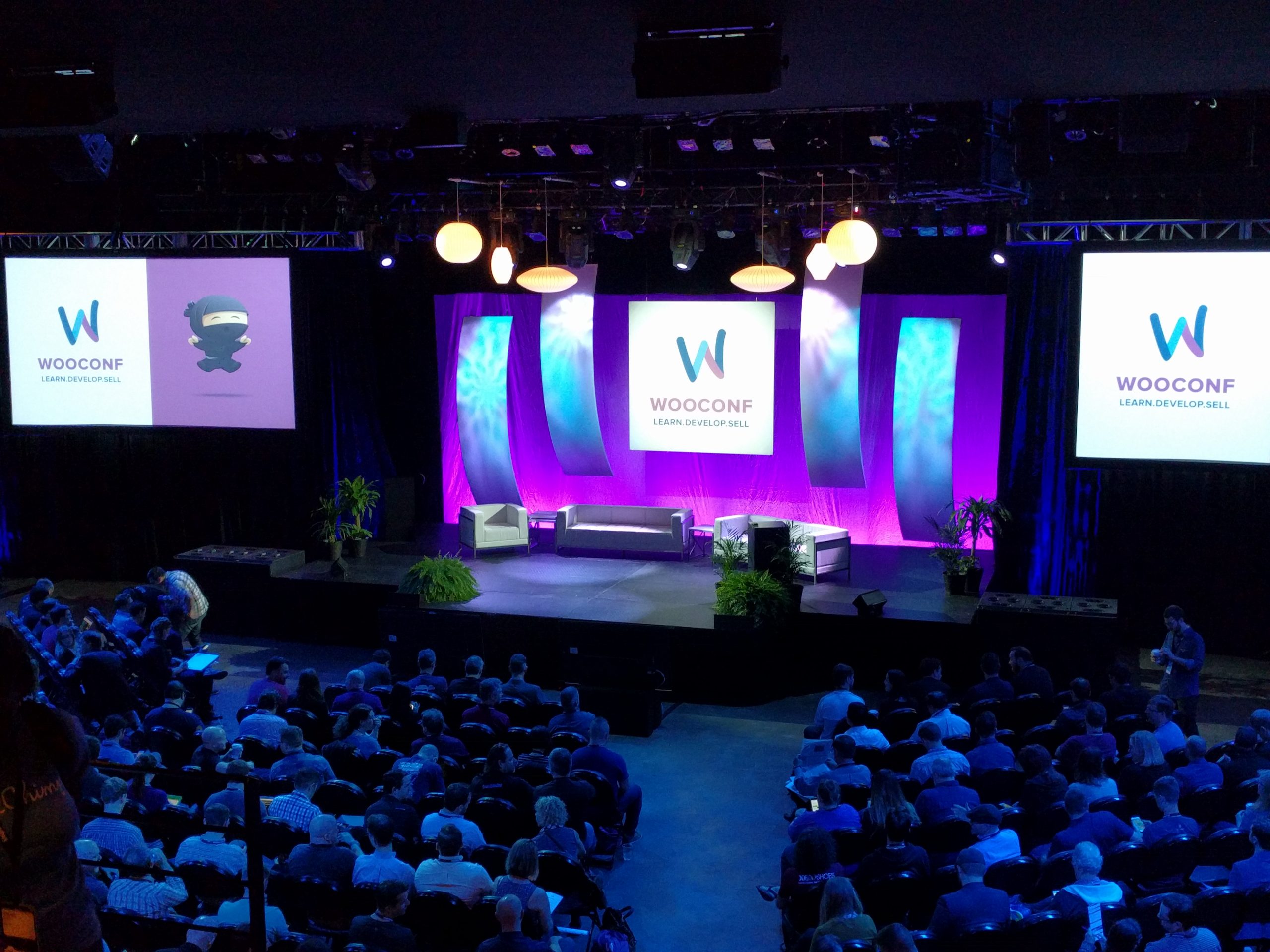
Last week in Palermo, something happened that reminded me why this ecosystem still matters so much. Checkout Summit brought people into the same room to talk about Woo, face to face, for the first time since WooConf 2017. And walking away from it, I felt compelled to write this.

Because something important is happening.

Continue reading An Open Letter to WooCommerce and the Woo Community

WooCommerce Needs More Noise (The Right Kind)

WooCommerce has never lacked talent. What it’s lacked—at least up until recently—is noise.

I’m not talking about marketing, but real, human, day-to-day signals from the people actually building the plugin. We’ve seen some of it over the past couple of years, and when it happens, it changes everything: clarity improves, trust grows, and the community gathers together.

The problem? It’s still too rare.

At a time when AI is flooding the internet with generated content and competitors are getting louder, silence is risky. If we don’t hear what Woo is working on, thinking about, and struggling with, we’re left in a limbo. And guesswork is where attention drifts.

This isn’t a criticism. It’s a call to action.

Continue reading WooCommerce Needs More Noise (The Right Kind)

We Need To Talk About WooCommerce (More Than Ever)

If we look at competitors, I don’t think we talk enough about WooCommerce. Not nearly enough, at least.

For an ecosystem this big (7+ million active installs according to WP.org, 4 million websites according to StoreLeads, and 6,5 million websites according to BuiltWith), there are few places where developers, agencies, and merchants can come together and have real conversations.

I mean actual “conversations”… and not tweets (which Woo has definitely embraced in the last couple of years) or support threads.

Because if we keep talking, we can move forward as “one”. As a community.

Talking is alignment. It’s knowing what’s coming before it’s announced. It’s understanding the challenges merchants face, what developers are building, and where agencies are focusing their energy.

When we spend time together—sharing ideas, testing new approaches, debating best practices—we’re not just individuals. We become one entity. We make the most of this beautiful open-source project.

We’re one ecosystem that can shape the future of WooCommerce, instead of reacting to it.

Conversations spark innovation. They uncover opportunities. They help us all move faster, smarter, and with purpose. And that’s exactly why creating spaces to talk—online or in person—matters more than ever.

Continue reading We Need To Talk About WooCommerce (More Than Ever)

Are We Losing WooCommerce Merchants Because of WP Admin?

If you ask a WooCommerce merchant about the WordPress admin today, you’ll likely get a frustrated reply.

The WP backend has been around forever, and WooCommerce relies on it for everything: orders, products, payments, settings, taxonomies, reports. Once you add the various plugins and themes most stores require, that dashboard quickly becomes a messy screen. Hard to navigate, and hard to focus on what really matters: running the business.

Meanwhile, competitors are moving fast. Their dashboards are clean, intuitive, and actually enjoyable to use. Everything is logical, everything is quick.

And us? We still need to deal with bloated sidebars, random widgets (I usually hide them all to keep my wp-admin clean), and notifications that feel more like spam than helpful insights.

Does this admin fatigue drive store owners away? Well, that’s the big question.

But before we look for an answer, we have to admit we haven’t done enough to modernize the experience. If we don’t fix the backend soon, it’ll be a dealbreaker.

Continue reading Are We Losing WooCommerce Merchants Because of WP Admin?

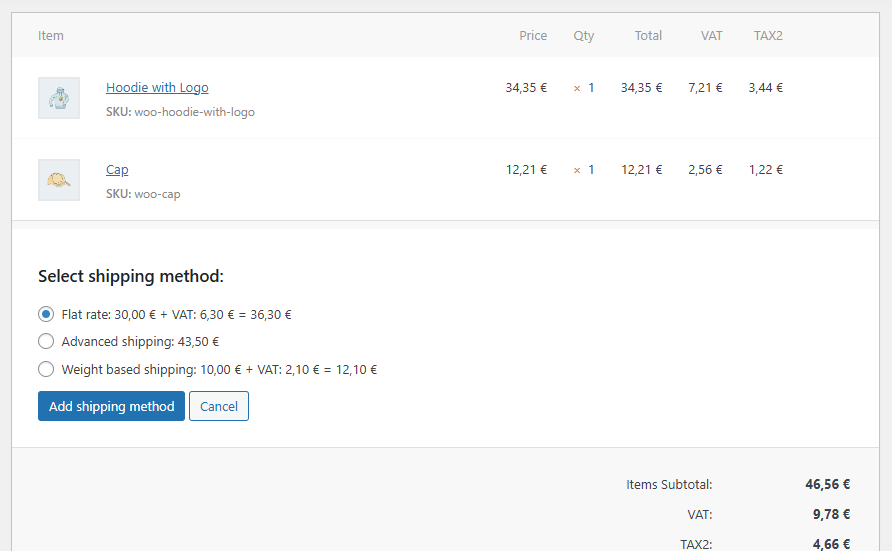
WooCommerce: Calculate Shipping From Order Admin

WooCommerce offers hundreds of ways to calculate shipping costs at checkout. And until now, there wasn’t a single solution for doing it directly inside the admin order editor.

Your shipping setup may be perfect with zones, rates, conditions, and edge cases, yet when you manually create or edit an order, you still have to enter the shipping cost yourself.

Even worse, as a developer, you often find yourself explaining to store owners why WooCommerce can’t recalculate shipping from the admin.

In this article, we’ll explore why WooCommerce only calculates shipping on the frontend, why recalculating from the admin isn’t as simple as it seems, and the usual workarounds that tend to be painful. Finally, we’ll introduce a plugin that solves all of this frustration—a true game-changer for anyone managing orders.

Continue reading WooCommerce: Calculate Shipping From Order Admin

WooCommerce Devs: WordPress Drama Won’t Stop Us

After a relatively quieter stretch (likely due to the ongoing lawsuits), the WordPress ecosystem is noisy again. We’re back to social media spats, endless threads about contributions, and who’s a “cancer” to the project.

It’s exhausting. And it’s distracting millions of us who just want to build.

So if it bugs you the same way it bugs me—simply unfollow the madness, mute the drama, and get back to shipping.

Plugins keep launching, stores keep converting, extensions keep selling, and the WooCommerce community keeps quietly powering real businesses every single day.

WordPress drama won’t stop us. It never has, and it never will.

Continue reading WooCommerce Devs: WordPress Drama Won’t Stop Us

How the WooCommerce Community Surprised Me This Week

Over the past few days, I’ve been running a little experiment with the WooCommerce community—and let’s just say, it’s been incredible. What started as a simple idea quickly turned into something much bigger than I expected.

I’ve been keeping notes, tracking milestones, and seeing the energy and creativity this community brings to the table. The results so far have been both encouraging and, honestly, quite surprising.

In this post, I’ll take you behind the scenes, share some unexpected moments along the way, and explain why I believe this experiment could serve as an example for anyone in the WordPress ecosystem, and beyond.

Continue reading How the WooCommerce Community Surprised Me This Week

Community Is Still the Best WooCommerce Feature

There are so many reasons why WooCommerce continues to power millions of stores around the world. It’s flexible. It’s open source. It’s customizable. But none of those explain its success on their own.

What truly makes WooCommerce thrive is… us. The community behind it.

For almost 15 years, developers, freelancers, agencies, makers, and merchants have shaped WooCommerce in public. They’ve shared code, answered questions, written tutorials, organized events, built extensions, and helped strangers solve problems at midnight on a Sunday on a random forum thread. That effort has done more than improve the software—it has moved it forward.

In this post, I want to reflect on why WooCommerce continues to stand out in a crowded ecommerce landscape, why community is still its strongest advantage, and why that human layer it’s the real deal (also including a live case study!).

Continue reading Community Is Still the Best WooCommerce Feature

My Honest Take on WooCommerce Checkout Block Adoption

The WooCommerce checkout block has been around since November 2023, yet most merchants are still sticking with the classic shortcode checkout.

So what’s going on?

After talking with clients, developers, and people across the ecosystem, I keep seeing the same pattern: curiosity mixed with hesitation. Not because the block is bad—but because switching checkout systems is a big deal, and nobody wants to mess with something that already works.

In this post, I’m sharing my honest take on the WooCommerce checkout block usage—what it actually is, how it differs from the legacy checkout, and why adoption hasn’t moved as fast as some expected.

If you’ve been wondering whether it’s worth paying attention to, the answer is yes. But maybe not for the reasons you think.

Continue reading My Honest Take on WooCommerce Checkout Block Adoption

When Big Brands Enter WooCommerce

When an established company decides to enter the WooCommerce ecosystem, it’s not just another product launch—it’s a reputation gamble.

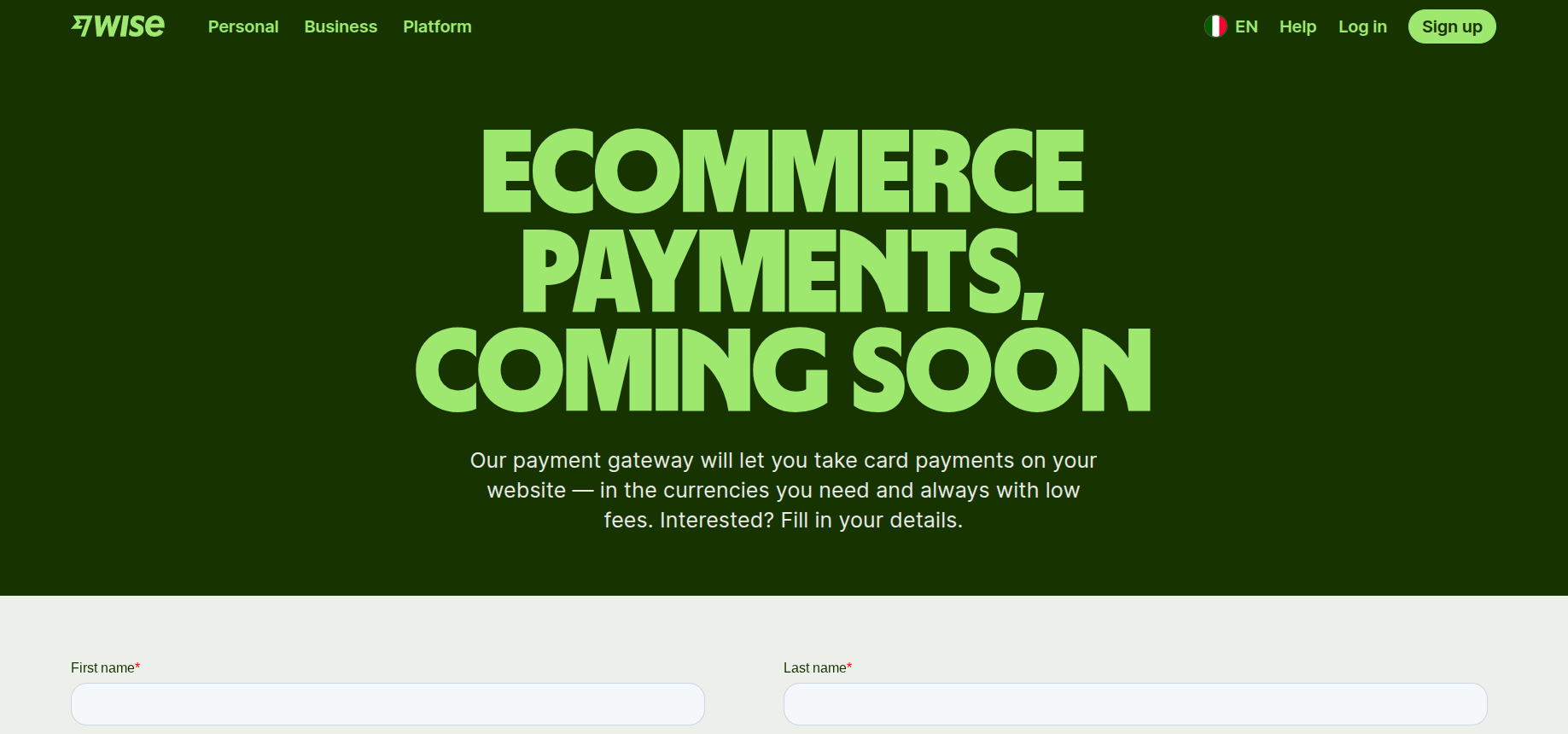
Take Wise as an example. Founded in 2011 to solve real-world currency exchange frustrations, it grew into a global financial platform serving millions (including me).

Yet, despite its scale and technical expertise, it had never built for WordPress or its commerce layer until… now. With a new payment gateway for WooCommerce on the horizon, it’s clear they’re approaching this market intentionally rather than casually.

And that’s rare. Most brands underestimate what it takes to succeed in the WooCommerce world, assuming development alone, plus a recognized logo, are enough. They are not.

Entering this space requires research, positioning, and community awareness—otherwise even the biggest names risk launching to silence, criticism, or worse: broken stores.

What fascinates me isn’t just that a major company is entering the space. It’s how they do it—and how different that approach is compared to the typical plugin launch we see every week.

So, if you’re a big brand (but the same applies if you’re a new company) entering the WP space, read on and see what research and positioning is required before writing your first line of code!

Continue reading When Big Brands Enter WooCommerce